Hip dysplasia is the most common skeletal condition diagnosed in dogs in the UK, and it disproportionately affects specific breeds. Whether your dog has been diagnosed, you have noticed signs in a young dog, or you are researching a breed before buying, the same three things make the biggest difference: knowing the risk level, recognising the early signs, and getting the management right early rather than late.
This guide covers each, with a particular focus on the UK-specific BVA/Kennel Club hip scoring scheme, which most owners have heard of and very few understand.
The short version
- Hip dysplasia is partly inherited and partly shaped by growth, weight and exercise. Risk is much higher in some breeds than others.
- UK breeds at highest risk: Labradors, German Shepherds, Golden Retrievers, Rottweilers, Newfoundlands, Bernese Mountain Dogs, Saint Bernards and most Mastiffs.
- Early signs (under 18 months) include bunny-hopping, an audible click from the hip, and reluctance to exercise. Late signs look like classic arthritis.
- The BVA/Kennel Club Hip Scoring Scheme is the UK tool for measuring it. Ask any large-breed breeder for the parents' scores before buying.
- Most dogs with hip dysplasia live comfortable lives with sensible weight management, the right exercise, joint support and occasionally surgery.
What hip dysplasia actually is
The hip is a ball-and-socket joint. The ball is the head of the femur (the thigh bone); the socket is the acetabulum (a cup in the pelvis). In a healthy dog the two fit together with smooth cartilage between them and a layer of joint fluid that lubricates the movement.
In hip dysplasia, the fit is wrong. The socket may be too shallow, the ball may be flattened or misshapen, or the soft tissues holding them together may be too lax. The result is a joint that rocks and rubs rather than glides. Over time the body responds with abnormal wear, low-grade inflammation, bone remodelling and, eventually, arthritis.
It is not an injury, and it is not something the dog did. The predisposition is born with the dog. How and when it presents depends on a combination of genetics, growth rate, body weight and exercise patterns over the first eighteen months of life.
The UK breeds most at risk
Hip dysplasia is concentrated in larger, faster-growing breeds. The picture in the UK is broadly:
- Labrador Retriever, Britain's most popular breed, also the most commonly diagnosed.
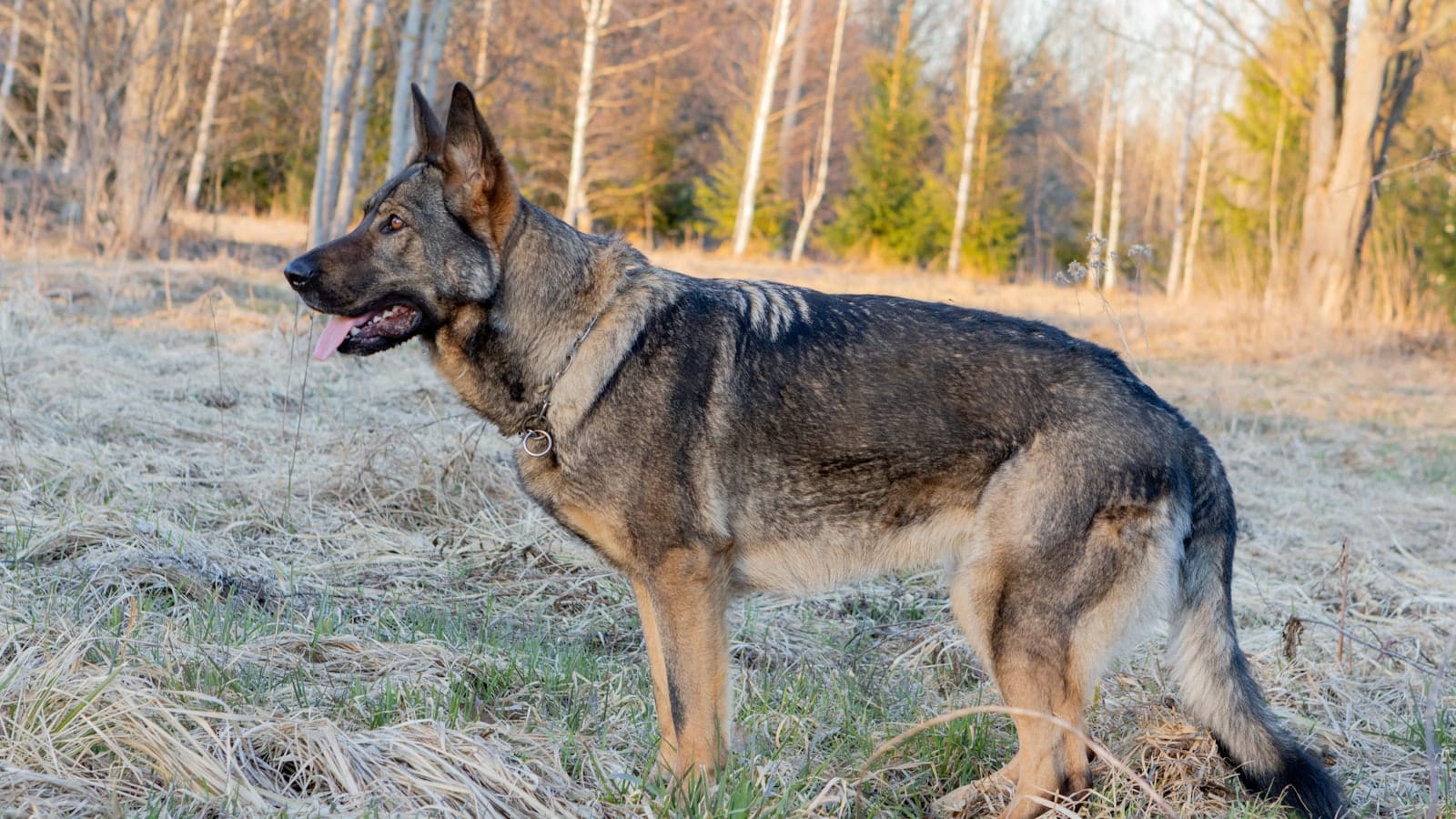
- German Shepherd, long-known association, partly genetic, partly bred for the sloping topline.
- Golden Retriever, similar risk profile to Labradors.
- Rottweiler, significant hip and elbow issues across the breed.
- Newfoundland, Saint Bernard, Bernese Mountain Dog, English Mastiff, Tibetan Mastiff, giant breeds carry the most load and have the highest prevalence.
- Bull Mastiff, Great Dane, Old English Sheepdog, also high.
Smaller breeds are not immune, but prevalence is dramatically lower and clinical disease tends to be milder when it does occur.
If you have a mixed-breed dog, look at the adult body weight. A 30-kilo crossbreed of unknown lineage sits in the same risk bracket as a purebred Labrador on this question.
Why some breeds are predisposed
Three factors combine.
Genetics. Hip dysplasia is polygenic. Multiple genes contribute, and the heritability is high. This is exactly why the UK scoring scheme works: by selecting against the worst hip scores generation after generation, a breed's prevalence comes down. Labradors have done this systematically for decades; some breeds have not.
Growth rate. Fast-growing puppies, particularly giant breeds, develop dysplasia at higher rates if soft tissue cannot keep up with skeletal growth. This is why large-breed puppies should be on diets formulated for them (which control growth rate) rather than standard puppy food.
Body weight and exercise. Overweight puppies and overexercised young dogs (high-impact, repetitive exercise before the growth plates close at around twelve to eighteen months) develop dysplasia at higher rates than lean, sensibly-walked ones. The combination is the worst of both worlds.
You cannot change the genetics your dog was born with, but the other two are within an owner's control during the years that matter most.
Early signs, under 18 months
Hip dysplasia often shows itself before the dog is fully grown, but the signs are subtle and easy to mistake for personality, clumsiness or breed quirks.
- Bunny-hopping, the dog moves both back legs together rather than alternating, especially when running. The single most distinctive early sign in a young dog.
- An audible click from the hip when standing up or moving.
- Reluctance to climb stairs, jump into the car, or sustain running.
- Difficulty rising after rest, settling back to "normal" after the first minute of movement.
- A subtly off gait that no one can quite name. You notice that the dog moves differently from littermates but cannot say how.
If a large-breed puppy shows two or more of these consistently, mention it at the next vet visit. Early diagnosis opens up management options that close as the dog matures, including some surgical interventions only useful before fourteen weeks.
Late signs, in mature dogs
By the time a dog is six or seven and the hips have been working at a disadvantage for years, the picture is the classic arthritis one: stiffness on first rising, hindquarter muscle wastage, reluctance on stairs, reduced walk enthusiasm, a shorter fuse about being handled at the back end. Our early signs of arthritis guide covers the full set; every sign in it applies more strongly to dogs with underlying dysplasia.
The BVA/Kennel Club Hip Scoring Scheme, in plain English
This is the UK-specific bit owners should know.
The British Veterinary Association and the Kennel Club run a joint scheme where breeders submit X-rays of breeding dogs' hips for assessment by a specialist panel. Each hip is scored from 0 to 53, where 0 is a perfect joint and higher is worse. The total hip score is the sum of left and right, so the range is 0 to 106.
Each breed has a published median score, the middle value across all dogs of that breed scored under the scheme. As a rule of thumb, a breeder selecting against dysplasia will breed only from dogs whose total score is at or below the breed median.
The two questions worth asking any large-breed breeder are:
- What are the parents' total hip scores?
- What is the breed median right now?
Compare. A breeder who knows the answers, scores every dog before breeding, and can hand you a printed score sheet is doing the work. A breeder who does not score, or who scored only one parent, or whose dogs sit well above the breed median, is not a safe bet for a high-risk breed.
Elbow dysplasia is scored separately through the same scheme and is worth asking about for breeds where it is relevant (Labradors, German Shepherds, Rottweilers, Bernese Mountain Dogs).
The Kennel Club's Mate Select tool lets you look up the hip and elbow scores of any registered dog and their offspring. It is free and worth using before committing to a puppy.
Managing a dog with hip dysplasia
Most dogs diagnosed with hip dysplasia go on to live full, comfortable lives with sensible day-to-day management. The pillars are the same as the wider arthritis picture, with extra weight on a few specifics.
Weight. The single highest-impact lever. An overweight dog with dysplastic hips deteriorates faster than a lean one, by a margin that surprises most owners. If your dog is carrying even a kilogram or two extra, that is the place to start. Most UK vet practices run free weight clinics with a vet nurse.
Exercise. The right amount, of the right type. Steady, moderate, daily exercise on soft surfaces is genuinely protective. Sudden sprints, long ball throws that involve twisting at speed, and slippery indoor floors are the opposite. For puppies of risk breeds, avoid high-impact exercise before about fourteen months. Our stairs guide covers practical home changes that compound here.
Joint support, started earlier than usual. Multi-pathway joint supplements with structural ingredients (glucosamine, chondroitin), anti-inflammatory ingredients (omega-3, green-lipped mussel, turmeric, Boswellia) and joint-tissue support ingredients (MSM, hyaluronic acid, type II collagen) are appropriate in risk-breed dogs from twelve to eighteen months, before any obvious symptoms. Our guide on when to start a joint supplement covers the timing in detail, and the research piece on glucosamine explains why multi-pathway formulations work better than single-ingredient ones. Tailkind's Joint Care Mobility Chews are built around exactly this approach.
Hydrotherapy. For dogs with confirmed dysplasia, hydrotherapy is often the most effective single intervention. The water supports the dog's weight while building the muscle that protects the joint. UK hydrotherapy centres are increasingly accessible; ask your vet for a referral.
Pain relief. When a vet prescribes a non-steroidal anti-inflammatory drug, it is because pain has reached the threshold where it is affecting quality of life. NSAIDs are well tolerated in most dogs with regular blood-work review. Do not be afraid of them when they are indicated; under-treated pain is worse than carefully managed medication.
Surgical options. In severe cases, surgery can transform a dog's quality of life. Options range from juvenile pubic symphysiodesis (a preventative procedure only useful in puppies under twenty weeks), through femoral head ostectomy, to total hip replacement. Most dogs never need surgery. For those who do, referral to a specialist orthopaedic vet is the route.
The five questions to ask a breeder
If you are considering a puppy from a high-risk breed, these five questions tell you most of what you need to know about the breeder:
- What are the parents' total hip scores, and how do they compare to the breed median?
- Have any of your previous puppies been diagnosed with hip dysplasia later?
- What food are the puppies on? It should be a large-breed puppy formulation.
- What exercise are the puppies getting now and what would you recommend for the first twelve to fourteen months?
- Are the parents also elbow-scored, and would you share the scores?
A breeder uncomfortable answering any of these is not the right breeder for a high-risk breed. A breeder who hands you the scores and offers to talk you through them is exactly the kind to buy from.
Frequently asked questions
Can a dog live a normal life with hip dysplasia?
Yes, most do. With sensible weight management, appropriate exercise, joint support started early and, where needed, vet-led pain relief or hydrotherapy, dogs with hip dysplasia typically live full and active lives. The condition is something to be managed rather than something that defines the dog. The dogs who do worst are usually the ones whose owners did not know they had it until later in life.
At what age does hip dysplasia usually show up?
Two windows. The first is between four and twelve months in young dogs of high-risk breeds, when the early signs (bunny-hopping, audible clicking, reluctance to exercise) become noticeable. The second is between six and ten years, when the cumulative wear has produced full arthritis. Many dogs with the underlying condition look fine through their prime years and only show clinical signs later.
Can hip dysplasia be cured?
No, but it can be managed extremely well. The underlying anatomy cannot be changed without surgery, and even surgical options manage rather than cure. The realistic goal in non-surgical management is to slow progression and keep the dog comfortable and mobile across the years that matter most. That is achievable in the great majority of cases.
Should I start joint supplements for a young dog from a risk breed before any signs?
For large and giant breeds with known risk, yes, somewhere between twelve and eighteen months is a sensible window. Multi-pathway joint supplements work pre-emptively as well as therapeutically, and the early years are when joint health is most worth protecting. Choose a product with stated doses of named ingredients (not "proprietary blend"), give it consistently for at least eight weeks before judging, and discuss the choice with your vet at the next routine appointment.
Topics