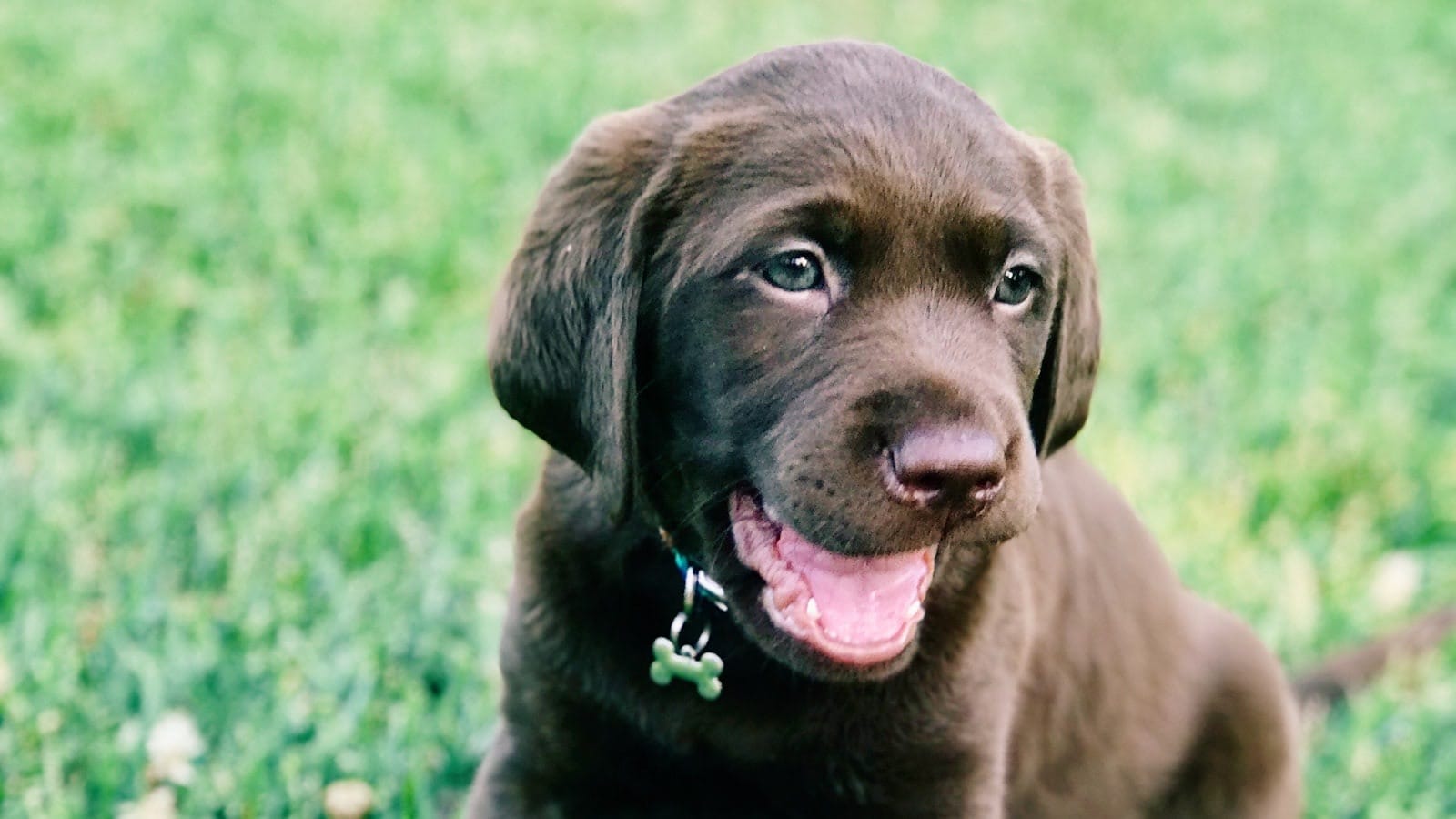
The joints your large-breed dog has at eight are shaped, to a surprising degree, by what happens in the first year. A giant-breed puppy grows from a couple of kilos to fifty or more in twelve to eighteen months, and during that window the skeleton is soft, growing fast, and vulnerable to being pushed too hard.
The good news is that the main things that protect a growing puppy's joints are within your control, and none of them is complicated. This guide covers what actually matters, and what to avoid.
The short version
- A puppy's growth plates are soft until they close, at around 12 to 18 months in large breeds. Too much high-impact exercise before then can cause lasting harm.
- A rough rule of thumb for structured walking: about five minutes per month of age, once or twice a day.
- Avoid repetitive jumping, long runs, stairs and slippery floors in the first year.
- Feed a large-breed puppy food. It is formulated to control growth rate, which protects the joints.
- Keep the puppy lean. A chubby puppy is not healthy; excess weight strains developing joints.
Why the first year matters so much
A puppy's long bones grow from areas of soft, developing tissue near each end, called growth plates. Until these harden and close, they are more vulnerable to damage than mature bone. In large and giant breeds this window stays open longer, often to 15 to 18 months, precisely when the dog is big, energetic and keen to run and jump.
Push a growing skeleton too hard during this window, with repetitive high-impact activity or too much weight to carry, and you raise the risk of developmental joint problems and set the stage for earlier arthritis. Get it right, and you give the joints the best possible start. This is prevention that genuinely pays off, because developmental conditions like hip dysplasia are shaped by exactly these early factors alongside genetics.
Exercise: how much is right
The instinct with a bouncy large-breed puppy is often to exercise them hard to tire them out. For the joints, that is the wrong instinct. What a growing puppy needs is enough activity for fitness and socialisation, without the repetitive high-impact loading that stresses soft joints.
The five-minute rule. A widely used rule of thumb is around five minutes of structured walking per month of age, once or twice a day. So a four-month-old puppy might have two 20-minute walks; a six-month-old, two 30-minute walks. It is a guide, not a law, but it is a sensible ceiling for on-lead, structured exercise in the first year.
Free play is different. Gentle, self-directed play and pottering, where the puppy stops when tired and sets its own pace, is fine and valuable. What you are limiting is sustained, repetitive, forced or high-impact activity.
What to avoid in the first year:
- Repetitive jumping, on and off furniture or in and out of the car. Use a ramp for the car.
- Long runs, especially on hard surfaces, and running alongside a bike or jogger (leave this until the skeleton has matured).
- Repeated stair climbing.
- Slippery floors, which cause the splayed slips that stress developing hips. Put down runners.
- Ball launchers and long fetch sessions with hard stops and twists.
What is good:
- Short, gentle lead walks within the rule-of-thumb limit.
- Free play on soft, grippy ground.
- Gentle training and socialisation, which tires the brain without loading the joints.
- Swimming in safe, controlled conditions, which builds fitness with no impact.
Food and growth rate
This is the second big lever, and it is about controlling the speed of growth, not the eventual size.
Large-breed puppies should be fed a food specifically formulated for large-breed puppies. These are designed with a controlled calorie and calcium balance that promotes steady, even growth rather than fast growth. It sounds counterintuitive, but growing a big-breed puppy more slowly produces healthier joints. Pushing rapid growth with an over-rich diet, or over-supplementing calcium, raises the risk of developmental joint disease.
A few practical points:
- Use a large-breed puppy formula until your breed's recommended age to switch (often around 12 to 18 months for large and giant breeds; your vet can advise).
- Do not add calcium or "extra" supplements unless your vet specifically recommends it. A complete large-breed puppy food already has the balance right, and over-supplementing can do harm.
- Measure meals and follow the feeding guide for the puppy's expected adult weight, adjusting to keep the puppy lean.
For joint-specific supplements, the first year is generally not the time for glucosamine-based products; the priority at this age is correct food, controlled growth and sensible exercise. Our guide on when to start joint supplements covers the right timing, which for large breeds is usually from around 12 to 18 months. You can explore Tailkind's dog chews range when your dog reaches that stage.
Keep the puppy lean
A roly-poly puppy is often thought of as healthy and well cared for. For the joints, the opposite is true. Every extra bit of weight is extra load on soft, growing joints, and excess weight in puppyhood is linked to a higher risk of developmental joint problems.
You should be able to feel your puppy's ribs easily and see a waist. If you cannot, ease back on quantity and treats and check with your vet. Keeping a large-breed puppy lean throughout growth is one of the most protective things you can do.
Choosing a puppy: the bit before you even bring them home
For high-risk breeds, joint protection starts before purchase. Choosing a puppy whose parents were screened for joint problems stacks the odds in your favour. Ask the breeder for the parents' hip and elbow scores under the BVA/Kennel Club scheme and compare them to the breed median. Our hip dysplasia guide explains how the scoring works and the questions to ask. Genetics is not the whole story, but for these breeds it is a meaningful part of it.
Frequently asked questions
How much exercise should a large-breed puppy get?
A widely used rule of thumb is about five minutes of structured, on-lead walking per month of age, once or twice a day, so around 20 minutes twice daily for a four-month-old. Gentle free play where the puppy sets its own pace is fine on top of this. The aim is to avoid sustained, repetitive high-impact activity while the growth plates are still soft, which in large breeds is until roughly 12 to 18 months.
Can too much exercise damage a puppy's joints?
Yes. While the growth plates are still open, repetitive high-impact activity, long runs on hard ground, repeated jumping and stair climbing, can stress developing joints and raise the risk of lasting problems and earlier arthritis. This is why big-breed puppies should have their structured exercise limited and be kept off slippery floors and away from repetitive jumping in the first year. Gentle, self-paced activity is fine.
What should I feed my large-breed puppy for healthy joints?
A complete food specifically formulated for large-breed puppies. These control the growth rate through a balanced calorie and calcium content, and steady growth produces healthier joints than fast growth. Do not add extra calcium or supplements unless your vet advises it, as over-supplementing can cause harm. Keep the puppy lean by measuring meals and following the guide for the expected adult weight.
When should I start joint supplements for a large-breed dog?
Generally not during early puppyhood; the priority then is correct food, controlled growth and sensible exercise. For large and giant breeds, the sensible window to begin a multi-pathway joint supplement is usually from around 12 to 18 months, especially for dogs at higher risk. Our guide on when to start joint supplements covers the timing by breed and risk, and it is worth discussing with your vet at a routine appointment.
Topics