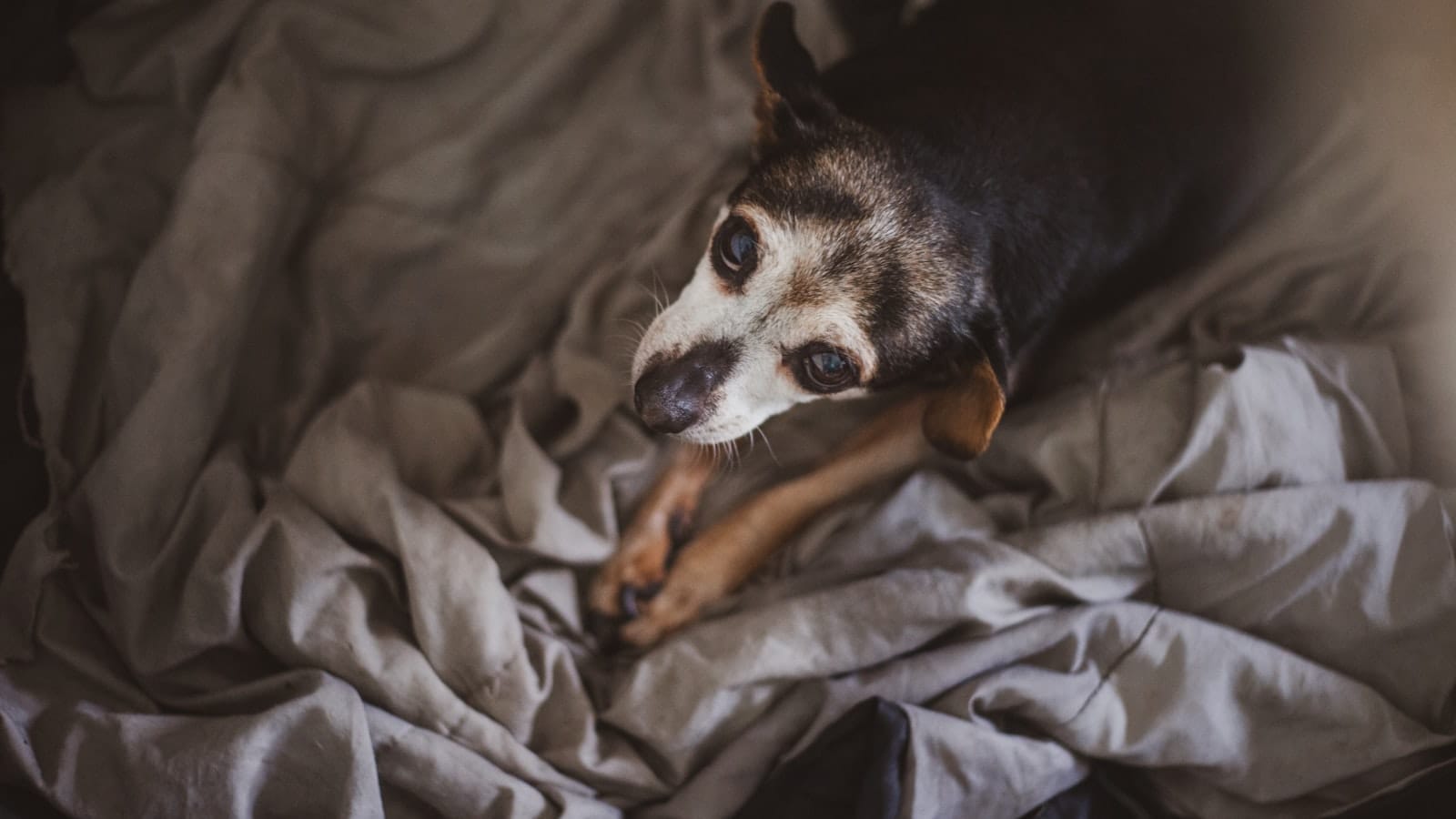
Most of the things that worsen in older dogs do so slowly. That is the kind problem and the cruel one: kind, because there is usually time to catch them; cruel, because the change is small enough day to day that owners do not notice until it has crossed a threshold.
The simplest counter is a short, predictable monthly habit. Ten checks. Ten minutes. Notes you can hand to the vet. That is all this guide is.
Once a month, in good light, with your dog calm, run through these ten checks:
- Eyes: clear, no discharge, no cloudiness new this month.
- Ears: clean inside, no smell, no head-shaking.
- Mouth and teeth: no broken teeth, no bad smell, gums pink not white or red.
- Coat and skin: no new lumps, no thinning patches, no flakes or redness.
- Weight and body shape: waist still visible from above, ribs still feelable not visible.
- Hindquarters muscle: firm and full, not softened, not asymmetric.
- Gait: even, no stiffness on rising, no head-bobbing on a sore leg.
- Breathing at rest: quiet, regular, not laboured.
- Urine and stools: normal colour, normal frequency, normal form.
- Behaviour and mood: her, just a month older.
Write one line of notes. Compare to last month's line. That is the entire routine.
Why this is worth doing
Vets see your dog for twenty minutes a year, maybe forty if you have moved to twice-yearly senior checks. You see her every day, and that is exactly what makes the small changes invisible to you. A monthly checklist creates the small bit of structure that turns "she seems fine" into "she has slowed slightly over the last six weeks, mainly on stairs, and her muscle over the back legs feels softer".
That second sentence is what a vet can act on. The first is not.
The ten-minute routine, in order
Run them in this order so the calm checks come first and the dog stays relaxed.
1. Eyes (60 seconds)
Look at each eye in good natural light. Clear corneas, no obvious cloudiness, no green or yellow discharge. A faint bluish haze in older dogs is often nuclear sclerosis (normal age-related change in the lens) and not cataracts, but anything that has come on visibly in the last month deserves a vet visit. New squinting, rubbing or apparent discomfort always does.
2. Ears (60 seconds)
Lift the flap. Look inside. The visible inner ear should be pale pink, with no smell, no waxy build-up out of proportion to your dog's breed, no redness. Head-shaking, scratching at the ears, or any smell at all is a vet check. Untreated ear inflammation gets worse, and it hurts.
3. Mouth and teeth (90 seconds)
Lift the lip on both sides. Healthy gums are bubblegum-pink. Pale gums (white-pink) can indicate anaemia; bright red can indicate inflammation. Look for broken or wobbly teeth, dark tartar build-up, and any lump in the gum line. Dental disease is one of the most common, most under-treated issues in older dogs. A bad smell is almost always significant.
4. Coat and skin (90 seconds)
Run both hands slowly over the dog from nose to tail tip. You are feeling for new lumps, hot patches, thinning fur, flaky skin. Pay attention to under the chin, the armpits, the chest, and along the back where you might not normally touch much. Any new lump that has appeared within the month, or any existing lump that has changed in size or feel, gets a vet visit.
If you find consistent itching or fur-thinning, our piece on why dogs itch walks through the most common UK causes.
5. Weight and body shape (60 seconds)
Look down at the dog standing. You should be able to see a clear waist behind the rib cage. Place your flat palm on her side and gently feel for ribs. You should feel them without seeing them. Visible ribs in an older dog is more often muscle loss than fat loss and is a vet conversation, not a treat conversation. Inability to feel ribs without pressing hard is overweight and deserves a vet-nurse chat about a weight plan.
6. Hindquarters muscle (60 seconds)
Compare the muscle over the thigh to the muscle over the shoulder. In a healthy adult dog the back legs should feel fuller and firmer. If the balance has flipped, if you can press a dip into the top of the thigh, or if one side feels meaningfully softer than the other, that is meaningful. Cross-reference with our early signs of arthritis piece: hindquarter wasting is one of the more reliable early signs.
7. Gait (60 seconds)
Walk the dog slowly across a non-slip surface and watch from behind. Look for even stride length, no head-bobbing (a head bob on every step is a sign of pain on the opposite front leg), no bunny-hopping. Then watch her get up from a lying position cold (no warm-up): the first ten seconds after standing are when arthritis shows itself. Our stairs guide has more.
8. Breathing at rest (30 seconds)
When she is settled, count her breaths for thirty seconds and double it. A normal resting respiratory rate for a dog is under 30 breaths per minute. Anything above that consistently, or laboured breathing, or any new cough is a vet visit. This is one of the most useful and most ignored measurements you can do at home.
9. Urine and stools (no extra time, you see these anyway)
In your day, are her stools normal-coloured (medium-to-dark brown), well-formed, and roughly the same number per day? Is her urine pale to medium yellow? Increased drinking and weeing, persistent loose stools, blood in either, or repeated straining is a vet visit. Our probiotics piece covers when supplementation makes sense for mild GI signs; persistent changes go to a vet first.
10. Behaviour and mood (60 seconds, the most important)
How is she in herself? Same enthusiasm at the lead? Same appetite? Same willingness to be touched? Same response to her name? A change in mood, withdrawal, or new short-temperedness in an older dog is often the earliest sign of discomfort or unwellness, and the most often missed.
A one-line log
Write one sentence after each check, in a notes app or a paper diary. Date, weight if you have scales handy, anything that has changed. Examples:
> 14 May: 24.5 kg. Eyes clear. Slight stiffness on rising, easing in two minutes. Stools normal. In good spirits.
> 14 June: 24.0 kg. Small new lump under chin, soft, mobile, pea-sized. Stiffness on rising same as last month. Slightly less enthusiasm on walks.
That is the kind of note a vet can act on. Most owners cannot tell you whether their dog is meaningfully different from three months ago without a log; with one, they can.
When to call the vet between checks, not at the next one
Some things should not wait for the monthly check:
The short version
- New lameness, especially if she is reluctant to bear weight
- Any blood in urine, stool, or vomit
- Sudden behaviour change
- Persistent panting or coughing
- Bloating of the abdomen, especially with retching
- Loss of consciousness, collapse, seizures
If you are unsure, your vet practice would always rather you ring and ask than wait.
What helps the long-term picture
Three things, repeatedly across this whole pillar:
- Sensible weight management, because excess weight is hard on every system that ages.
- Consistent, gentle exercise, because muscle protects joints and joints protect mobility.
- Appropriate joint support if she is in or approaching the senior band for her size. Tailkind's Joint Care Mobility Chews cover the multi-pathway approach the research points to. Our full review of UK joint supplements covers the alternatives if you want a comparison.
The monthly habit catches the unpredictable. The three things above slow the predictable.
Frequently asked questions
How often should I check my senior dog at home?
Once a month is the right rhythm for the full ten-minute routine. Weight, mood and gait are worth a glance more often (weekly is reasonable), and anything new gets attention straight away. Twice-yearly vet checks at the practice should sit alongside, not in place of, the home routine.
What is a normal weight for a senior dog?
There is no single answer; it depends on breed, build and historical weight. The better question is whether her body condition is right: ribs feelable but not visible, a clear waist from above, a slight tummy tuck from the side. Significant weight loss without you changing the food is always a vet visit.
What are the signs that an older dog needs urgent vet attention?
New lameness with weight-bearing reluctance, any blood in urine/stool/vomit, sudden behaviour change, persistent coughing, breathing difficulty, a bloated abdomen with retching, collapse, or seizures. Do not wait for the monthly check or the next planned visit; ring the practice.
Do I really need to weigh my senior dog every month?
A monthly weight is genuinely useful because gradual weight change is one of the most reliable early indicators of several conditions. Most UK vet practices will weigh your dog for free on a walk-in basis. A home scale is fine too if you have one big enough.
Topics