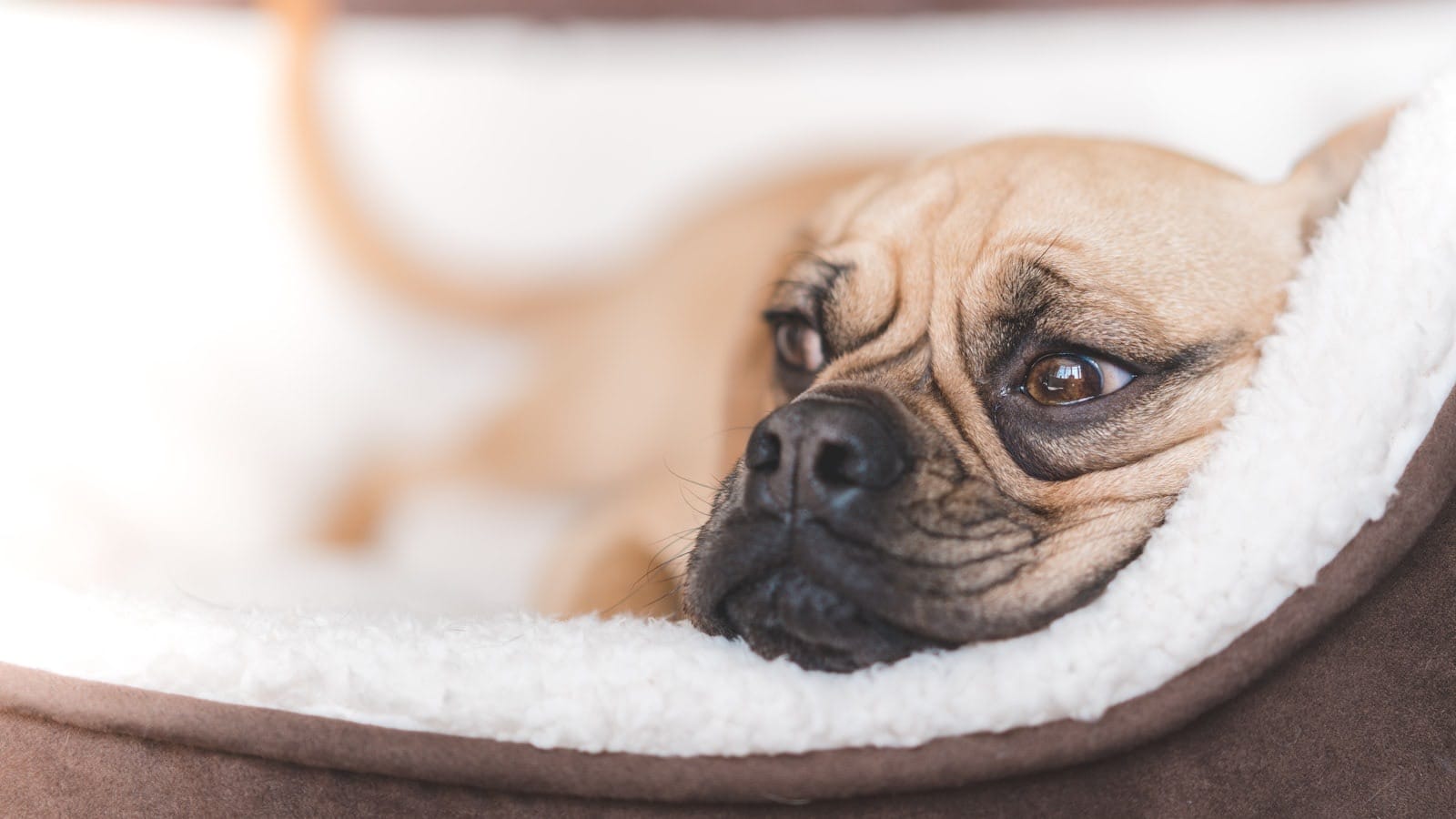
Some of the most effective help you can give a stiff or arthritic dog costs very little and happens in your own home. Before medication, before supplements, the everyday environment either works with your dog's joints or against them. A few one-off changes reduce the daily wear, prevent the falls that cause setbacks, and let an ageing dog keep its dignity and independence.
This guide is a practical walk through the house, room by room, with the changes that genuinely help.
The short version
- Non-slip flooring is the single biggest change. Slippery floors are exhausting and risky for a stiff dog.
- A supportive, warm, easy-to-enter bed matters more than owners think.
- Ramps for the car and steps for the sofa remove repeated high-impact jumping.
- Raised bowls, warmth, and a clear, uncluttered layout all help.
- None of this replaces veterinary care, but together it makes every day easier.
Start with the floors
If you change one thing, change the floors. Hard, smooth flooring, laminate, tile, polished wood, vinyl, is one of the biggest hidden challenges for a dog with stiff joints. Without grip, every step involves a small effort not to slip, the legs splay, and the constant bracing is tiring and sometimes frightening. A single slip can cause a soft-tissue injury or a loss of confidence that sets a dog back for weeks.
The fixes are simple and cheap:
- Lay runners and rugs along the routes your dog uses most: the hallway, the path from bed to door, around food bowls, and to the garden. Rubber-backed rugs and runners stay put.
- Cover the landing zones, the spots where a dog turns, stops, or gets up, which is where most slips happen.
- Consider toe grips or paw traction products for dogs that still struggle, and keep the fur between the pads trimmed, as long tufts reduce grip.
The difference a gripped floor makes to a stiff dog is often immediate and striking.
The right bed
A dog with sore joints spends a lot of time lying down, so the bed is not a luxury, it is equipment.
- Support matters most. A proper orthopaedic or memory-foam bed distributes weight and cushions the joints against the hard floor. A thin, flat bed does little for a dog that aches.
- Easy in, easy out. Very high sides are hard for a stiff dog to climb over. A bed with at least one low edge lets them get in and out without a struggle.
- Warm and draught-free. Cold and damp stiffen arthritic joints, so place the bed away from draughts and cold floors. In winter, a little extra warmth genuinely eases stiffness.
- The right size. Big enough to stretch out fully, because many arthritic dogs are uncomfortable curled tight.
Consider more than one bed if your dog likes to be near you in different rooms, so it never has to choose between comfort and company.
Ramps and steps
Jumping is one of the hardest things you can ask an arthritic dog to do, and the two big culprits are the car and the sofa.
- A car ramp removes the jump in and out of the boot, which is a significant load on the joints. Foldable ramps are inexpensive and easy to store. Introduce it gently, with treats, before you rely on it.
- Steps or a ramp for the sofa or bed, if your dog is allowed up, spares repeated jumping on and off. Solid, non-slip pet steps tend to feel more secure to a dog than wobbly foam ones.
- Train the equipment early. Do not introduce a ramp for the first time during a flare-up. A dog that already knows how to use it will accept it far more readily.
Bowls, doors and layout
Small adjustments around the house add up:
- Raised food and water bowls can help dogs with pain in the neck, shoulders or elbows, letting them eat and drink without stooping. Not every dog needs them, but for some they make mealtimes far more comfortable.
- An uncluttered path to the essentials, bed, bowls, door, water, so a stiff or less-sighted dog is not navigating obstacles.
- A dog flap or easy door access to the garden reduces the pressure on a dog that is slower to get up and out for the toilet.
- Manage stairs. Where possible, set the dog up to live on one level, or gate the stairs and lift smaller dogs. Our guide on helping an older dog with stairs covers the detail, including the right way to lift.
Warmth and routine
Two easy wins that owners often overlook:
- Keep them warm and dry. Cold, damp weather visibly stiffens arthritic dogs. A coat for a thin or short-coated dog on cold walks, a warm dry-off after wet weather, and a cosy bed away from draughts all help.
- Keep the routine predictable and gentle. Little-and-often walks, gentle warm-ups before activity, and no pressure to do more than the dog is comfortable with. Consistency suits stiff joints.
Where this fits in the bigger picture
Home changes are one pillar of managing stiff joints, and one of the most cost-effective. They work best alongside the others: keeping your dog lean, appropriate daily exercise, veterinary care and pain relief where needed, and joint support such as Tailkind's Joint Care Mobility Chews. Our full arthritis management guide pulls the whole plan together.
The nicest thing about the home changes is that they are largely one-off, inexpensive, and pay back every single day. An afternoon spent laying runners and sorting out a proper bed can improve your dog's comfort more than you might expect.
Frequently asked questions
What flooring is best for a dog with arthritis?
Any non-slip surface. The problem is not the material itself but the lack of grip on smooth floors like laminate, tile and polished wood, which make a stiff dog brace and slip with every step. You do not need to re-floor the house; laying rubber-backed runners and rugs along your dog's regular routes and over the spots where it turns and gets up solves most of it cheaply and immediately.
What is the best bed for an arthritic dog?
A supportive orthopaedic or memory-foam bed that cushions the joints against the floor, with at least one low edge so a stiff dog can get in and out easily, placed somewhere warm and draught-free. Size matters too: it should be big enough to stretch out fully. A thin, flat bed on a cold floor does little for an aching dog, so the support and warmth are what count most.
Do raised bowls help dogs with arthritis?
For some dogs, yes. Raised food and water bowls can make eating and drinking more comfortable for dogs with pain in the neck, shoulders or elbows, by reducing how far they have to stoop. Not every arthritic dog needs them, and they are not essential, but they are an easy, inexpensive adjustment worth trying if your dog seems to find bending down to the floor uncomfortable.
How can I help my arthritic dog at home without medication?
A lot. Non-slip flooring, a proper supportive bed, ramps to avoid jumping, raised bowls where helpful, warmth, and an uncluttered layout all reduce daily strain and prevent falls. Alongside these, keeping your dog lean and appropriately exercised does more than any single product. These measures complement veterinary care rather than replacing it, so keep your vet involved, especially for pain relief, but the home environment is genuinely one of the biggest levers you control.
Topics