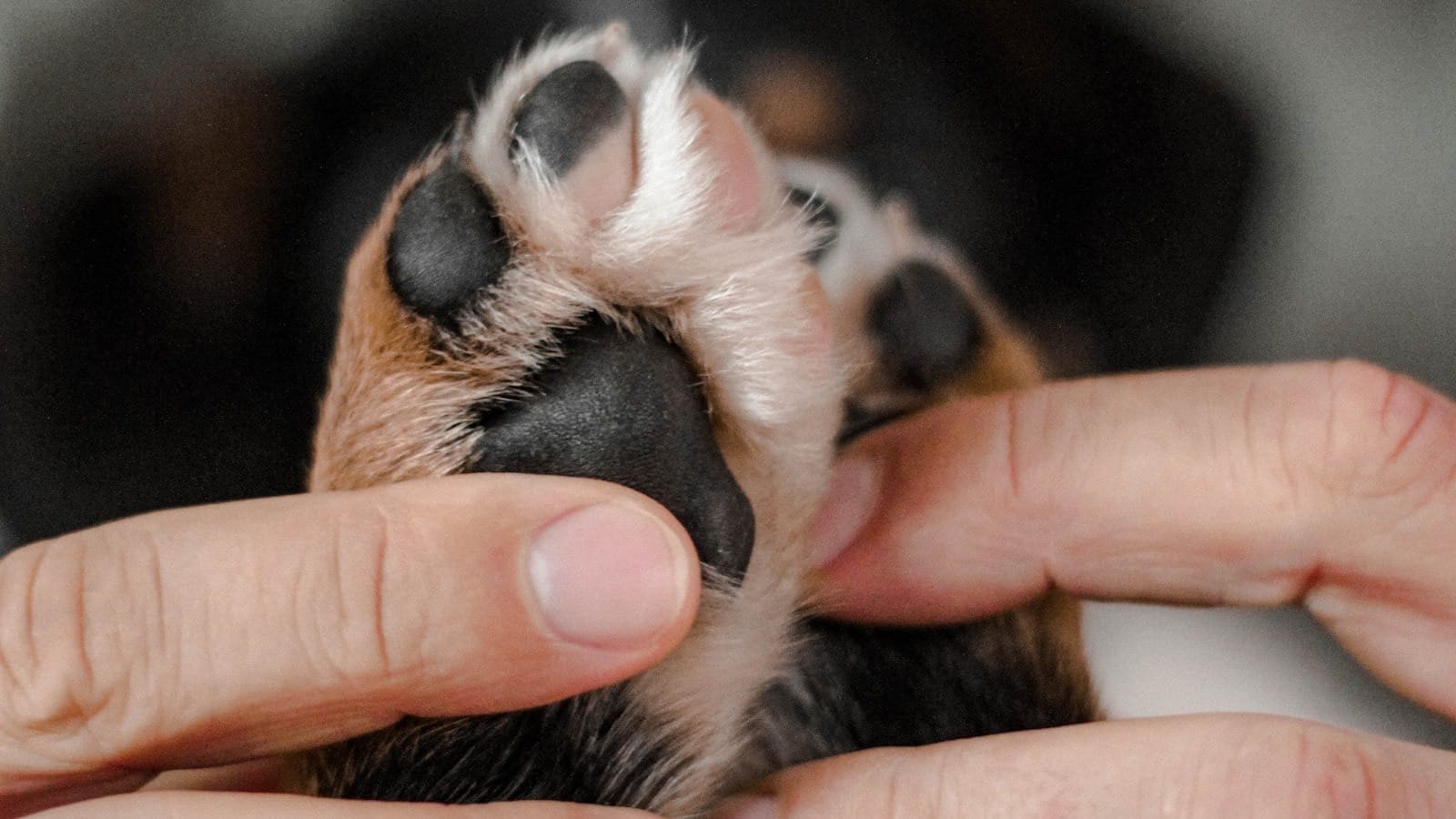
A limp is your dog telling you something hurts or does not work properly. The hard part is that a limp can mean anything from a thorn in a pad that will be forgotten by teatime to a torn ligament that needs surgery. Reading it correctly, and knowing when it is an emergency, saves your dog pain and saves you a lot of worry.
This guide walks through how to tell a serious limp from a minor one, the most common causes in UK dogs, and what to do next.
The short version
- Call the vet urgently if your dog cannot bear any weight on a leg, the leg looks misshapen, there is obvious swelling or a wound, or your dog is in evident pain or distress.
- Book a routine appointment for a limp that persists beyond 24 to 48 hours, comes and goes, or is worse after rest.
- You can briefly monitor a very mild limp that appears after hard play and settles quickly, with rest.
- Sudden limps tend to be injuries; gradual limps tend to be arthritis or developmental conditions.
- Never give human painkillers. Many, including ibuprofen and paracetamol, are toxic to dogs.
First: is this an emergency?
Before anything else, run through the red flags. Any one of these means ring your vet now rather than waiting.
- Your dog will not put any weight at all on the leg, or holds it completely off the ground.
- The leg is at an odd angle, or you can see obvious swelling or deformity.
- There is a visible wound, heavy bleeding, or a bone showing.
- Your dog is crying out, panting hard, shaking, or clearly in severe pain.
- The limp came with a fall, a road accident, or another obvious trauma.
- There is dragging of a limb, or sudden weakness in the back legs (this can signal a spinal problem and is urgent).
If none of these apply, you have a bit more time to observe and decide, which is what the rest of this guide is for.
Reading the limp: four questions
A vet will ask these, and thinking them through at home makes your appointment far more useful.
1. Sudden or gradual? A limp that appeared out of nowhere, mid-walk or after a jump, points towards an injury: a sprain, a strain, a torn ligament, or something stuck in the paw. A limp that has crept in over weeks or months points towards a slow process such as arthritis or a developmental joint condition.
2. Front leg or back leg? Front-leg limps often involve the shoulder, elbow, wrist or paw. Back-leg limps often involve the hip, knee (stifle) or hock, and the knee is where one of the most common serious injuries happens (see cruciate ligament below). Watch your dog walk away from you and towards you to work out which leg.
3. Better or worse after rest? This is a genuinely useful distinction. An injury usually feels worse with use and eases with rest. Arthritis is often the opposite: stiff and worst in the first few minutes after getting up, then loosening with gentle movement. If your dog is stiffest first thing in the morning and warms out of it, think arthritis rather than acute injury.
4. Constant or intermittent? A limp that comes and goes, perhaps showing up only after a long walk or on cold mornings, is typical of a chronic, manageable problem. A constant, unremitting limp deserves quicker attention.
The most common causes
Something in the paw
The simplest and most common cause of a sudden limp. A thorn, a grass seed, a cut pad, a broken nail, or a stone stuck between the toes. Check the paw gently, including between the pads and toes and the nails. Grass seeds in particular are a summer menace in the UK and can burrow in, so if you see a small swollen or weeping spot between the toes, see your vet.
Soft-tissue injury (sprains and strains)
Like us, dogs pull muscles and strain ligaments, especially after over-enthusiastic play, a slip, or a sudden twist. These often improve with a few days of genuine rest (lead-only toilet breaks, no running or jumping). If a suspected sprain has not clearly improved within a couple of days, have it checked.
Cruciate ligament injury
One of the most common serious causes of back-leg lameness in dogs. The cranial cruciate ligament in the knee ruptures, partially or fully, often during normal activity rather than dramatic trauma. The classic sign is sudden hindleg lameness, sometimes with the dog toe-touching or holding the leg up. It usually needs veterinary assessment and often surgery. We cover it in detail in our guide on cruciate ligament injury in dogs.
Arthritis
The most common cause of gradual, intermittent limping in middle-aged and older dogs. Stiff on rising, worse in cold and damp, eases with gentle movement, and often affects more than one leg so it can look like a general slowing rather than a single limp. Our guide on the early signs of arthritis covers what to look for.
Developmental joint conditions
In younger dogs, particularly larger breeds, a limp can signal a developmental problem such as hip dysplasia, elbow dysplasia, or osteochondritis. These often show up as a gradual limp or an odd gait in a dog under two, and early diagnosis genuinely matters.
Paw pad and nail problems
Burns from hot pavements in summer, cracked pads in winter, and torn or overgrown nails all cause limping. The hot pavement test is worth knowing in warm weather.
What to do while you wait for the appointment
For a non-emergency limp you are monitoring or that has a routine appointment booked:
- Rest properly. Lead-only toilet breaks, no running, jumping, stairs or rough play. Genuine rest is the single most useful thing you can do, and half-rest often prolongs the problem.
- Check the paw gently for anything obvious you can safely remove (a stone between the pads). Do not dig at anything embedded.
- Do not medicate. Human painkillers such as ibuprofen, aspirin and paracetamol are dangerous, in some cases fatal, to dogs. Wait for the vet to prescribe something safe.
- Note the details. Which leg, sudden or gradual, better or worse with rest, any triggers. A short written note makes the consult quicker and more accurate.
- Keep them comfortable. A warm, supportive bed and easy access to water and the garden.
What the vet will do
A lameness assessment usually involves watching your dog walk and trot, feeling and flexing each joint to find the sore spot, and checking range of movement. Depending on findings, your vet may recommend X-rays or other imaging to see inside the joint, and will discuss pain relief. Do not feel rushed into extensive investigation if the cause is obvious, but do follow through on imaging where the vet thinks a ligament, developmental problem or arthritis is likely.
When the limp turns out to be arthritis
If the answer is arthritis, the good news is that it is very manageable. The foundations are keeping your dog lean, consistent gentle exercise, a supportive home, and appropriate joint support. Multi-pathway joint supplements such as Tailkind's Joint Care Mobility Chews can support the joints alongside vet-led care, and our review of UK joint supplements covers how to choose. Where pain relief is needed, your vet will guide it.
Frequently asked questions
My dog is limping but does not seem to be in pain. Should I still worry?
Possibly. Dogs are very good at masking pain, so a limp without obvious distress can still reflect a real problem, including early arthritis or a partial ligament injury. If a limp persists beyond 24 to 48 hours, comes and goes over time, or is worse after rest, book a routine vet appointment even if your dog seems otherwise happy.
Should I walk my dog if they are limping?
No. Rest a limping dog rather than walking it, using lead-only toilet breaks and avoiding running, jumping and stairs. Continuing normal walks on an injured leg usually makes things worse and can turn a minor problem into a lasting one. If the limp has not clearly improved with a couple of days of rest, or is severe, see your vet rather than pushing on.
When is a limp an emergency?
Treat it as an emergency and ring your vet immediately if your dog cannot bear any weight on the leg, the leg looks misshapen or swollen, there is a wound or bleeding, your dog is in evident pain, the limp followed a fall or road accident, or there is dragging or sudden back-leg weakness. When in doubt, phone the practice; they would always rather advise than have you wait.
Can I give my dog painkillers for a limp?
Not without veterinary direction, and never human painkillers. Ibuprofen, aspirin and paracetamol can be toxic, even fatal, to dogs. Dog-safe anti-inflammatories exist and are very effective, but they are prescription medicines that need the right dose and monitoring. Wait for your vet to assess the limp and prescribe something appropriate rather than medicating at home.
Topics